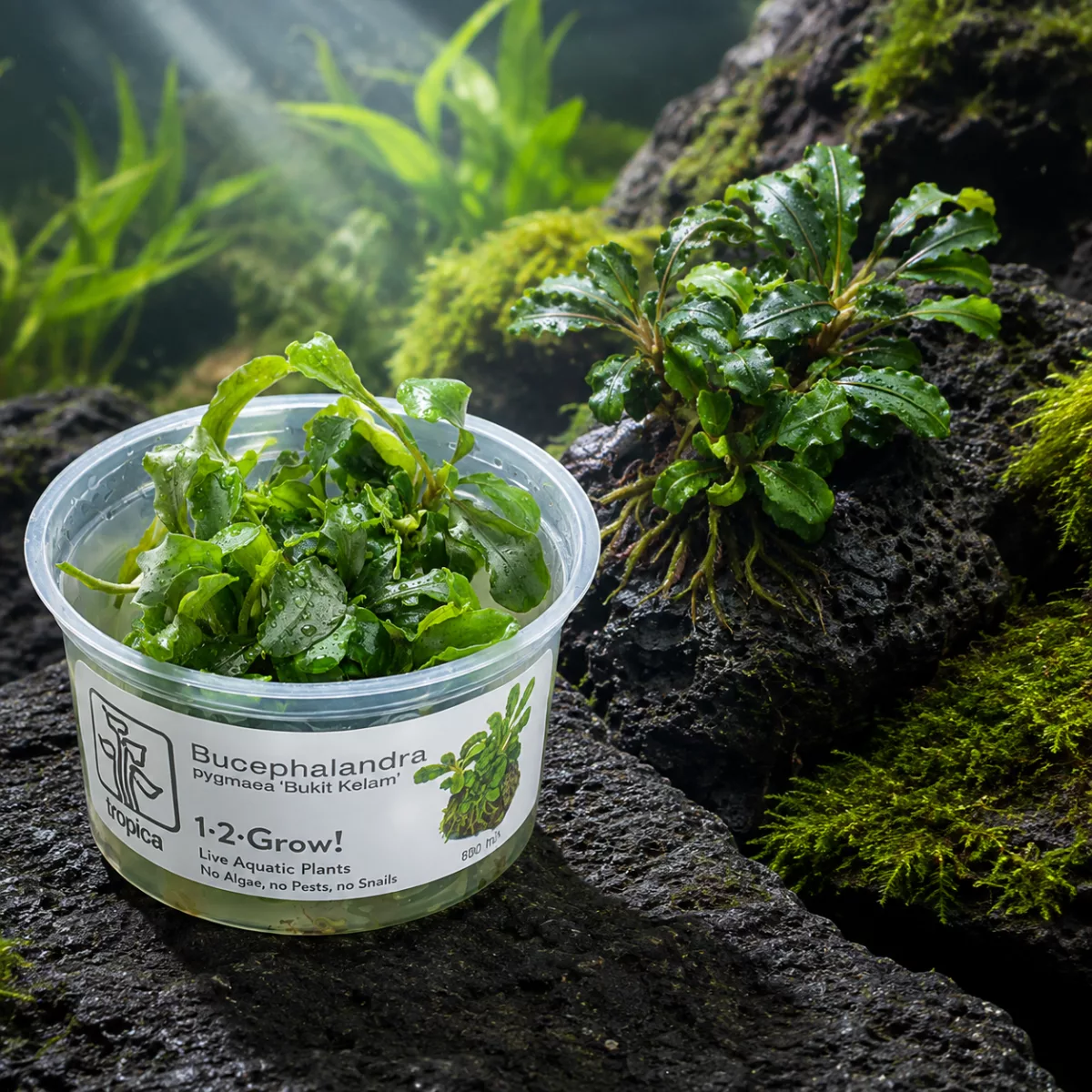
Bucephalandra pygmaea ‘Bukit Kelam’ – Tropica 1-2-Grow! in vitro
Compact Bucephalandra with dark green, slightly wavy leaves. This easy and undemanding epiphytic plant attaches to stones and roots to create a natural, lasting layout.
Description
Bucephalandra pygmaea ‘Bukit Kelam’ is an epiphytic aquarium plant from Asia, particularly prized in aquascaping for its compact habit and its dark green leaves with slightly wavy edges.
Its slow growth makes it possible to keep a clean and balanced composition for a long time. Underwater, its leaves may develop delicate small light spots as well as subtle highlights that showcase dark stones and natural roots particularly well.
Easy and undemanding, this Bucephalandra prefers low to moderate lighting. Adding CO₂ is not essential, but balanced fertilization and a regular CO₂ supply can encourage denser growth.
This plant is offered as a Tropica 1-2-Grow! in vitro culture. It is grown in a laboratory in a controlled environment and normally contains no snails, no unwanted algae and no parasites. It is therefore particularly suited to aquariums housing shrimp and other sensitive animals.
Characteristics:
• Botanical name: Bucephalandra pygmaea ‘Bukit Kelam’
• Type: epiphytic rhizome plant
• Difficulty: easy
• Origin: Asia, Borneo
• Growth: slow
• Indicative height: about 5 to 8 cm
• Lighting: low to medium
• CO₂: optional, but beneficial
• Placement: foreground or middle of the aquarium
• Recommended support: rock, root or other hardscape element
• Packaging: Tropica 1-2-Grow! in vitro culture
Planting tips:
Gently remove the plant from the cup and carefully rinse off the nutrient gel with clean water. Divide it into several small portions, then attach them to a stone or a root with a fine thread or an aquarium-safe glue.
Caution: the rhizome must never be buried in the substrate. It must remain fully visible and exposed to the water, otherwise it risks rotting.
After being installed, the plant may need a few weeks to adapt. As its growth is naturally slow, avoid moving it frequently.